

CALCULUS VISION
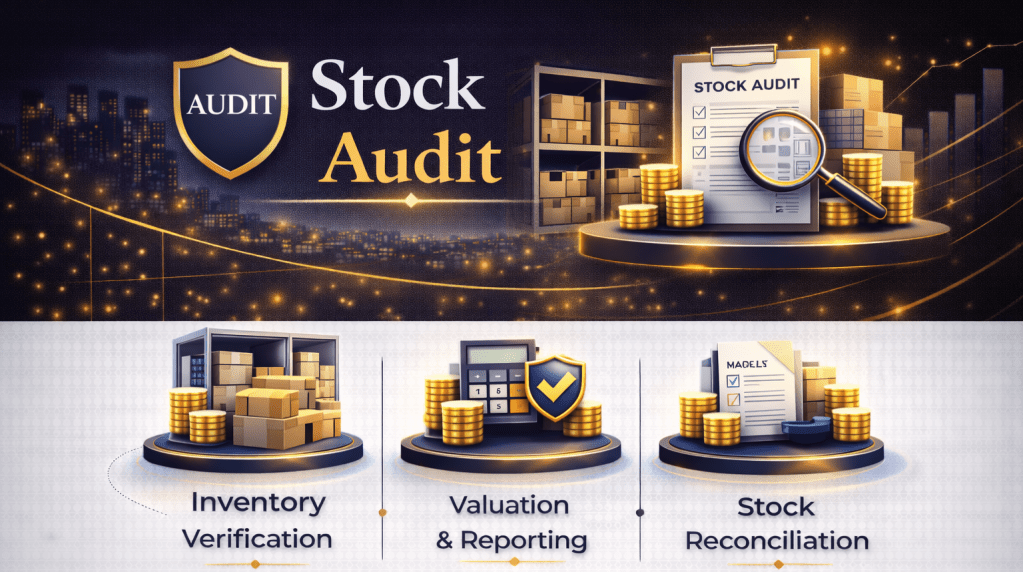
Stock Audit
Inventory accuracy. Asset protection. Financial credibility.
Stock Audit is a detailed verification of inventory records to ensure that physical stock matches book records and is properly valued. It is particularly critical for manufacturing units, trading entities, and businesses with high inventory turnover or bank-funded working capital limits.
Inaccurate stock reporting can distort profitability, inflate working capital requirements, and create regulatory or banking exposure. At Calculus, Stock Audit is conducted with structured verification procedures, valuation analysis, and documentation discipline.
Objective of Stock Audit
Verify existence. Validate valuation. Strengthen control.
- Physical Verification of Inventory
Conducting on-site stock checks to confirm quantity and condition of goods. - Reconciliation with Books of Accounts
Comparing physical stock with stock registers and accounting records to identify discrepancies. - Valuation Method Review
Evaluating whether inventory valuation (FIFO, weighted average, etc.) is applied consistently and in accordance with applicable accounting standards. - Identification of Obsolete or Slow-Moving Stock
Assessing ageing and usability to prevent overstatement of assets.
Scope of Stock Audit
Comprehensive and risk-focused review.
- Raw material, work-in-progress (WIP), and finished goods verification.
- Goods-in-transit and consignment stock review.
- Verification of stock pledged to banks or financial institutions.
- Review of stock movement records and internal controls.
- Cut-off procedures around period-end reporting.
The scope is tailored based on operational size and risk exposure.
Importance for Banking & Finance
Stock audits are often required by banks for borrowers with working capital limits. Proper reporting ensures:
- Accurate drawing power calculation.
- Prevention of over-financing risk.
- Credible reporting to lenders.
- Improved loan negotiation strength.
Transparent stock reporting strengthens financial credibility.
Key Risk Areas Identified
- Inflated stock valuation.
- Unrecorded stock shortages.
- Weak internal inventory controls.
- Mismatch between GST turnover and stock movement.
- Obsolete or damaged inventory not written off.
Early identification prevents financial misstatement.
Stock Audit Process
- Preliminary review of inventory management system.
- Physical verification and sampling methodology.
- Documentation and stock register reconciliation.
- Valuation and ageing analysis.
- Detailed report with findings and corrective recommendations.
The process is analytical and evidence-based.
Benefits of Structured Stock Audit
- Enhances financial statement reliability.
- Strengthens internal control systems.
- Improves working capital management.
- Reduces audit qualifications.
- Prevents fraud and misappropriation risk.
Stock Audit at Calculus is conducted with precision, independence, and analytical rigor—ensuring inventory records are accurate, defensible, and aligned with financial and regulatory expectations.

 CALCULUS VISION